

Parenting guide
Article overview
Are You Listening to Your Child or Just Correcting Them?

The Difference Between Hearing and Listening
Every parent wants their child to grow into a responsible, kind, and confident person. In this effort, many parents spend a lot of time teaching, guiding, and correcting. But in the process, they often forget one essential part of communication — listening.
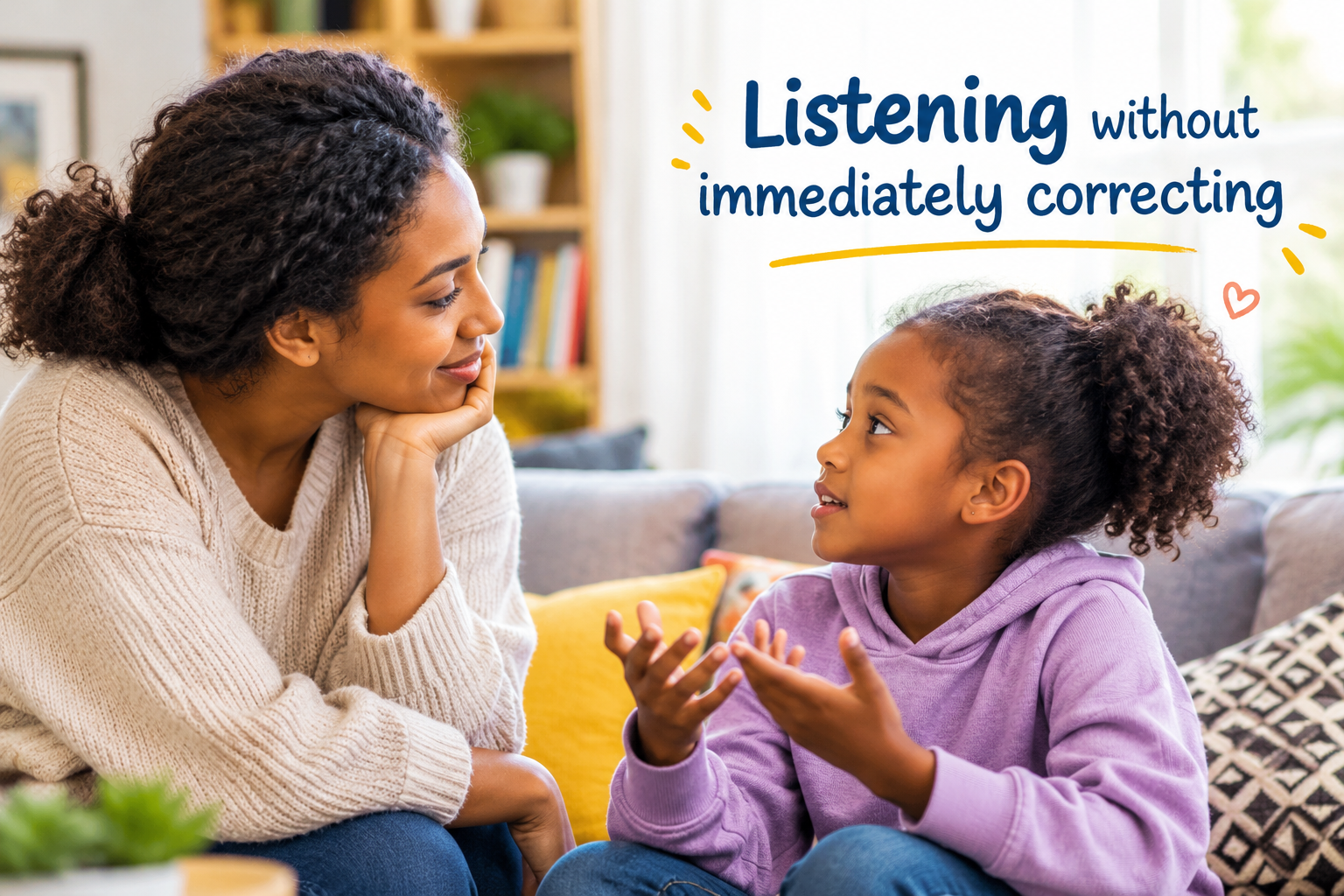
Listening is not the same as hearing. Hearing is passive; listening is active. It means paying attention not just to words, but to emotions, tone, and body language. When children feel truly heard, they feel valued. When they feel constantly corrected, they feel judged.
The Habit of Constant Correction
Parents often correct their children out of love — to protect them from mistakes or to teach them right from wrong. However, when correction becomes the main form of communication, it can create emotional distance.
Phrases like “Don’t do that,” “You’re wrong,” or “That’s not how it’s done” may seem harmless, but repeated over time, they send a message: “You’re not good enough.”
Children who grow up hearing constant criticism may stop expressing themselves freely. They might hide their feelings, avoid conversations, or become defensive.
Why Listening Matters More Than Correcting
Listening is one of the most powerful ways to build trust. When parents listen without interrupting or judging, children feel safe to share their thoughts and emotions.
1. Builds Emotional Security
Children who feel heard develop stronger self-esteem. They learn that their opinions matter and that they can express themselves without fear.
2. Encourages Open Communication
When parents listen, children are more likely to talk about their problems, mistakes, and fears. This openness helps prevent misunderstandings and strengthens the bond.
3. Teaches Empathy
By modeling active listening, parents teach empathy. Children learn to listen to others with patience and understanding.
4. Reduces Conflict
Many arguments between parents and children arise from miscommunication. Listening helps parents understand the root cause of behavior instead of reacting to it.
Signs You’re Correcting More Than Listening
- Interrupting your child mid-sentence
- Offering solutions before they finish speaking
- Dismissing their feelings with phrases like “It’s not a big deal”
- Focusing on what they did wrong instead of how they feel
- Talking more than listening during conversations
If these patterns sound familiar, it may be time to pause and reflect on how communication happens at home.
How to Practice Active Listening
1. Give Full Attention
Put away distractions like phones or TV. Make eye contact and show genuine interest in what your child is saying.
2. Listen Without Judgment
Avoid jumping to conclusions or correcting immediately. Let your child finish before responding.
3. Reflect and Validate
Repeat what your child says in your own words to show understanding. For example: “It sounds like you felt left out when your friends didn’t include you.”
4. Ask Open-Ended Questions
Encourage deeper conversation with questions like “How did that make you feel?” or “What do you think you’ll do next?”
5. Respond with Empathy
Sometimes children don’t need advice — they just need comfort. A simple “I understand” or a hug can mean more than a lecture.
The Power of Silence
Silence can be powerful. When parents pause instead of reacting, it gives children space to think and express themselves. It also helps parents respond thoughtfully rather than emotionally.
Balancing Guidance and Listening
Listening doesn’t mean avoiding correction altogether. Children still need guidance and boundaries. The key is balance — correct behavior when necessary, but also listen to understand the feelings behind it.
For example, instead of saying, “Stop shouting,” try, “I can see you’re upset. Let’s talk about what’s bothering you.” This approach acknowledges emotion before addressing behavior.
The Long-Term Impact of Listening
Children who grow up with parents who listen become better communicators, problem-solvers, and emotionally intelligent adults. They learn that their voice matters — and that love is not conditional on perfection.
Listening builds trust that lasts a lifetime. It turns everyday conversations into opportunities for connection and growth.
The next time your child speaks, pause before responding. Listen not just to their words, but to their heart. That’s where real connection begins.
.
Source notes
- Simple parent-child activities
- UNICEF and other parenting guidance emphasize connection, listening, encouragement, and spending focused time with children. (UNICEF)
- Recommended EthiKidsPlay structure
- Parenting → Positive Parenting
- ❤️ What Is Positive Parenting?
- 🧘 Discipline Without Yelling
- ⭐ Praise That Builds Confidence
- 👂 When Your Child Doesn't Listen
- 🧡 15 Minutes of Connection Every Day
- This gives EthiKidsPlay a strong 5-article starter series that can later expand into 20–30 Positive Parenting articles for the website.
- Here are 5 reliable Positive Parenting links you can use for EthiKidsPlay content:
- UNICEF – Positive ParentingGuidance on respectful, calm parenting and setting boundaries. (UNICEF)UNICEF Positive Parenting
More ideas in this section
- Suggested title:15 Minutes a Day: How Small Moments Can Strengthen Your Relationship With Your Child
- Cover:
- One-on-one time
- Playing together
- Reading together
Use these ideas as a starting point, adapt them to your family, and consult a qualified professional when personalised advice is needed.
Source: 8 EthiKidsPlay → Parenting.docx.


